How Puzzle Games Train Your Brain Better Than You Think
Picking up a puzzle game feels like pure relaxation. But something else is happening under the surface. Your brain is working, reorganising, and building connections you never asked it to make. The science behind this is more interesting than most players realise, and it holds up across age groups, puzzle types, and skill levels.
Puzzle games are not just entertainment. They are structured cognitive exercise running quietly in the background.
- Regular puzzle play has been linked to improved working memory and faster pattern recognition across all adult age groups.
- Different puzzle formats target different mental skills, from spatial reasoning in jigsaws to deductive logic in number grids.
- Starting with short, low-pressure formats makes the habit stick without feeling like extra effort.
Why Your Brain Responds So Strongly to Puzzles
The brain is a prediction machine. It is always trying to anticipate what comes next based on what it already knows. Puzzle games exploit this tendency in a very direct way. Every time you identify a pattern, fill in a grid, or deduce the next logical step, you are training your brain to predict faster and more accurately.
This connects to a process called neuroplasticity. The brain physically rewires itself based on repeated activity. When you practise pattern recognition through puzzle play, the neural pathways involved in that skill get stronger and faster over time. It is measurable in brain imaging studies and shows up consistently in cognitive performance tests.
Research on cognitive health across age groups consistently points to mentally stimulating activities as a meaningful factor in maintaining sharpness as we age. Puzzle games fit squarely into that category, and they carry the added advantage of feeling like play rather than maintenance.
Pattern Recognition: The Hidden Engine Behind Puzzle Play
Pattern recognition is one of the most transferable cognitive skills a person can have. It helps you read social situations, troubleshoot problems at work, and absorb new information faster. Puzzle games train it constantly, often without the player noticing.
Take a jigsaw puzzle. Every piece you examine is a rapid test. You are scanning edge shapes, colour gradients, and texture cues at the same time. You are comparing what you see against a mental model of the completed image. That scanning and comparing loop is pattern recognition running on repeat, session after session.
Number-based puzzles work the same muscle through a different method. Instead of visual matching, you are tracking which values have already appeared in a row, column, or box. You are holding multiple constraints in mind simultaneously and narrowing down possibilities. That kind of multi-variable tracking is exactly what the brain uses in analytical tasks far outside any game.
The more you practise these mental moves in a low-stakes environment, the more automatic they become in high-stakes ones.
Memory Gets Quietly Rebuilt Through Regular Play
Working memory is the short-term scratchpad your brain uses to hold information while you act on it. It is the cognitive function most directly engaged during puzzle play, and it is also one of the first to slip if it goes unused for long stretches.
Logic grid puzzles are especially demanding on this system. You have to hold a set of clues in mind, apply them to a grid, and track what each clue eliminates. Every new clue interacts with all the previous ones. Your brain cannot simply discard what it just processed. It has to integrate information continuously across many steps.
Crossword puzzles pull from a different kind of memory. They test long-term retrieval. When you are stuck on a clue, your brain searches its stored knowledge and surfaces associations that might fit. That retrieval practice strengthens memory pathways in much the same way that active recall revision does, only it feels like leisure rather than study.
Both types of memory benefit from consistent puzzle exposure. A single session does very little. A regular habit does a great deal. The distinction matters, because it means the goal is repetition, not intensity.
Problem-Solving Skills That Move Beyond the Game
One underappreciated outcome of regular puzzle play is how it reshapes your general approach to problems. Players who stick with puzzles over time tend to develop certain mental habits that show up well away from the screen.
Puzzle games reward a methodical mindset. You learn to break a complex situation into smaller, manageable pieces. You learn to test assumptions rather than commit to them before you have evidence. You learn that a dead end carries useful information, not failure. These are not trivial skills. They show up in professional contexts, in everyday planning, and in how people handle uncertainty.
There is also something worth noting about frustration tolerance. A genuinely hard puzzle teaches you to sit with uncertainty and keep trying without quitting. That is a real psychological skill, and puzzle games build it through low-stakes repetition spread across many small sessions.
Four Steps to Make Puzzle Gaming a Lasting Habit
Starting is always the easy part. Keeping the habit alive is where most people drift. These steps are based on how habits actually form, not just how we imagine they should.
- Pick one format and stick with it for two weeks. Jumping between puzzle types before you have built familiarity with any of them makes it harder to notice progress. Commit to one format first, then branch out.
- Set a fixed time rather than a fixed duration. “I will do a puzzle after breakfast” is a stronger trigger than “I will spend ten minutes on puzzles.” Attaching the habit to an existing routine makes it automatic much faster.
- Start at a difficulty level that feels slightly too easy. If you begin too hard and walk away frustrated, the habit never forms. Early wins matter more than early challenge.
- Track your streaks, but restart without judgment if you miss a day. The goal is long-term consistency. A few missed days do not erase the neural work you have already done.
Comparing Puzzle Formats: What Each One Actually Trains
Not all puzzle types target the same cognitive skills. Understanding what each format genuinely trains helps you choose based on what you want to improve, rather than just what looks appealing at a glance.
Puzzle Formats Ranked by Their Primary Cognitive Benefit
| Puzzle Format | Primary Skill Trained | Difficulty Range | Best Suited For |
|---|---|---|---|
| Jigsaw | Spatial reasoning, visual pattern matching | Easy to expert | Visual and hands-on learners |
| Standard Sudoku | Logical deduction, numerical constraint tracking | Beginner to expert | Analytical and structured thinkers |
| Mini Sudoku | Focused logic, short-burst concentration | Beginner-friendly | Players new to number logic |
| Logic Grid | Deductive reasoning, working memory load | Moderate to hard | Those who enjoy multi-step reasoning |
| Crossword | Vocabulary, long-term memory retrieval | Easy to expert | Word lovers and general knowledge enthusiasts |
Where to Begin if You Have Never Tried Any of This Before
The biggest barrier for new puzzle players is rarely difficulty. It is commitment. Most people do not want to download an app, create an account, or pay for access just to test whether they enjoy something. That friction kills the habit before it ever has a chance to form.
Browser-based puzzle games have become the most practical entry point for beginners as a result. They require nothing except a device and a few free minutes. You can close the tab and return the next day without any penalty or lost progress anxiety.
For anyone curious about the Sudoku family specifically, free Mini Sudoku gives you a 6×6 grid that reduces the cognitive load considerably without stripping out the core logic that makes the format useful. It is browser-native, requires no installation, and works on any device you have to hand. Each puzzle takes between three and five minutes to complete, which makes daily play genuinely sustainable even on a packed schedule.
Starting small is not settling for less. It is the only approach that actually works over the long term. A habit you maintain consistently is worth far more than an ambitious one you abandon after two weeks.
The Quiet Compounding That Happens When You Keep Showing Up
The cognitive benefits of puzzle games are not dramatic or instant. They build the way physical fitness does, through accumulated effort that only becomes visible after enough repetition.
After a week of daily play, you probably will not feel any different. After two months, you might notice that certain types of thinking feel less effortful than they used to. After six months, the difference tends to be measurable on standard cognitive assessments. The brain adapts to what you consistently ask of it, and puzzle games give it something genuinely worth adapting to.
Age limits this process far less than most people assume. Adults well into their sixties and seventies show meaningful gains in processing speed and working memory from sustained puzzle engagement. The brain retains plasticity across a much longer arc of life than older research suggested, and games are among the more accessible ways to take advantage of that fact.
The habit does not need to be rigid or time-consuming. Two or three sessions a week still delivers real benefit. The variable that matters most is that you actually return to it, not that you do it perfectly or at a fixed hour every single day.
Pick a format that matches where you are right now. Spend five minutes with it. Come back tomorrow. The brain takes it from there.
Related Posts
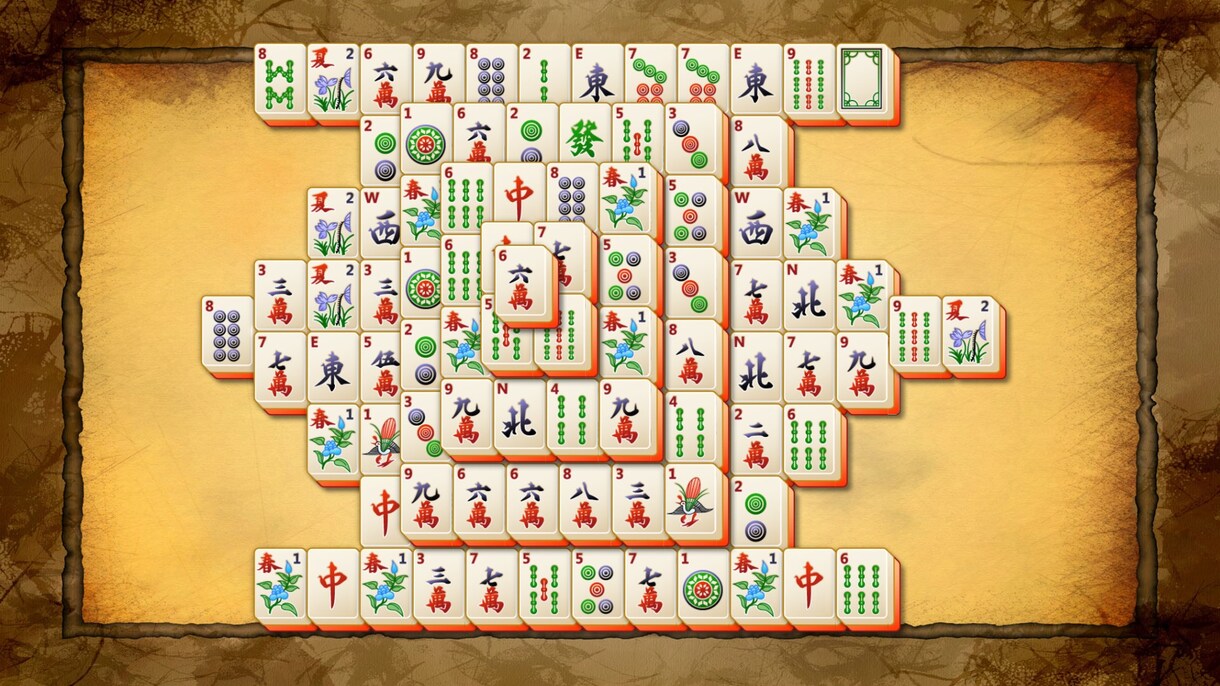
Mahjong Games
What Is Mahjong Games? Mahjong Games is a timeless tile-based game that blends strategy, memory, and pattern recognition into an engaging and rewarding experience. Originating from China, Mahjong has evolved over centuries to become a global phenomenon, with countless digital…
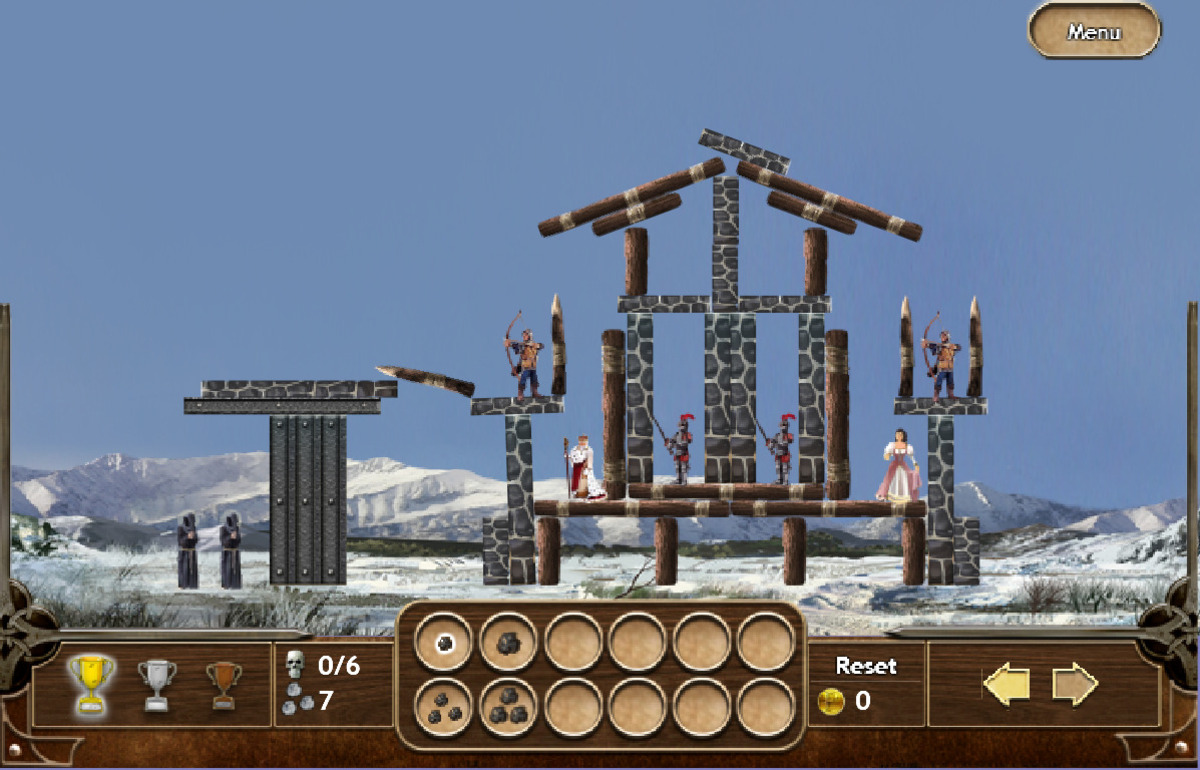
Castle Clout 2
A Medieval Game of Physics and Vengeance Castle Clout 2 is a browser game that left a mark on players from the early 2010s thanks to its unique mix of timing, destruction, and a medieval theme. This isn’t your typical…
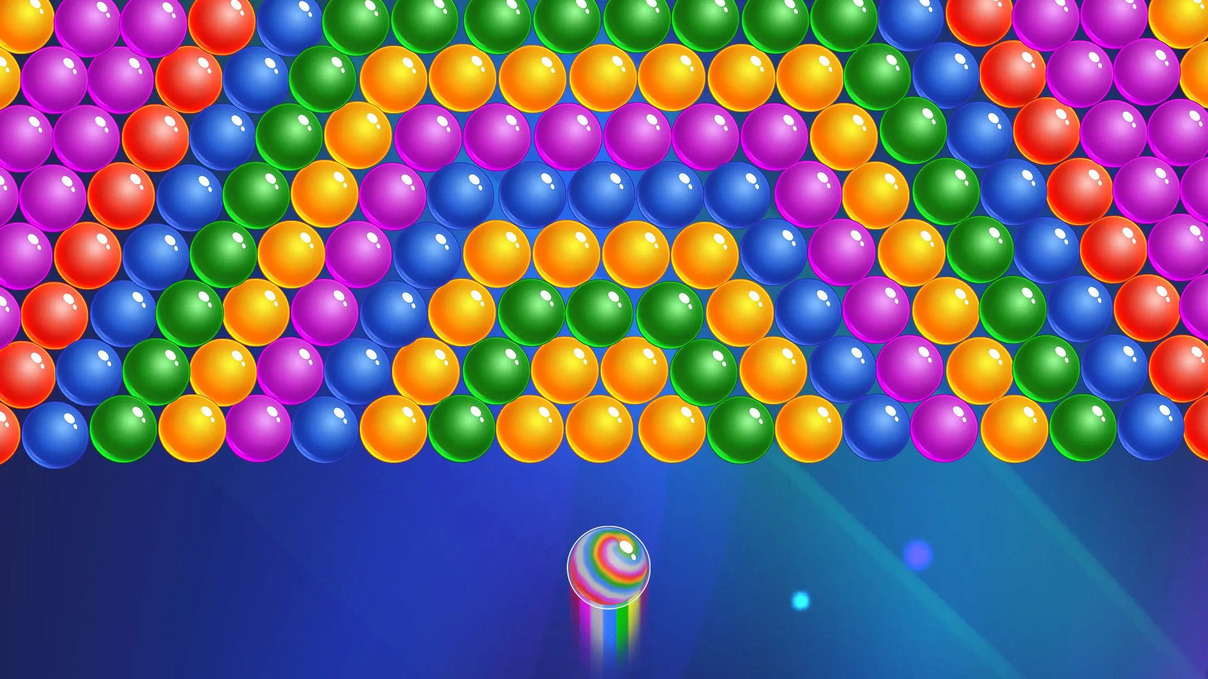
Bubble Shooter
What Is Bubble Shooter? Bubble Shooter is a timeless arcade puzzle game that has captured the hearts of players across the globe with its simple mechanics and addictive gameplay. The goal is straightforward: shoot colored bubbles from the bottom of…